
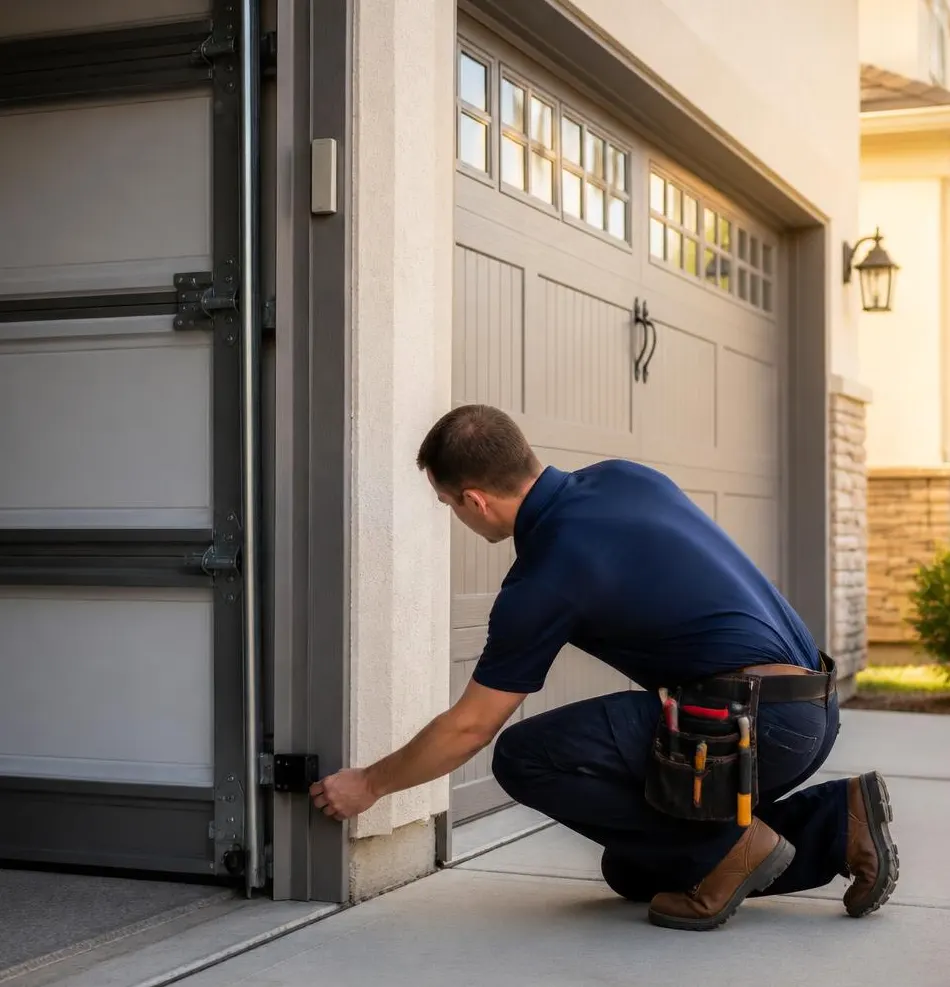
The frayed cable is the one to worry about tonight. The worn roller can usually wait for a scheduled appointment. Here's why those two "it's probably fine" parts behave so differently, and how to tell which one you're actually looking at.
What These Parts Actually Do
Garage door cables are the steel lifelines attached to the bottom corners of your door. They run up to a drum near the torsion spring and do the real work of lifting the door's weight, in partnership with the spring. Rollers are the small wheels, usually nylon or steel, that ride inside the track and let the door glide up and down. One holds your door up. The other helps it move smoothly. That difference matters a lot when something goes wrong.
How to Tell Them Apart
A frayed cable looks like a wire that's starting to unravel, usually near the bottom bracket where it bends and flexes most. You might see small broken strands sticking out, a shiny groove where the cable has been rubbing against metal, or the cable sitting loose and slack instead of taut. A door with a frayed cable often hangs crooked, with one side noticeably lower than the other, because that cable is no longer pulling its share of the weight.
A worn roller sounds and feels different. You'll hear grinding or a rhythmic thump as the door moves, notice the door jerking or hesitating partway through its cycle, or see a roller that's visibly cracked, flat-sided, or wobbling in the track. The door still moves, just roughly, and it tends to get louder over weeks rather than failing all at once.
Why This Matters More Here Than It Might Elsewhere
Eagle Lake's climate is hard on both parts, but in different ways. Humidity and afternoon downpours keep moisture in the air most of the year, and that moisture works its way into cable strands, causing rust that weakens the metal from the inside before you ever see fraying on the outside. If your home is close enough to pick up any salt air, that corrosion moves faster. Rollers face a different problem: heat and humidity cause the nylon housings to swell and the lubricant inside bearings to break down, which speeds up the grinding and wobble. Hurricane-season wind loads add another layer — a door that's already relying on a compromised cable or a track that's slightly out of alignment from worn rollers is far more likely to fail under wind pressure than one that's been properly maintained.
Which One Is the Real Emergency
A frayed cable is a safety issue, not just a maintenance item. Cables work under serious tension from the torsion spring, and a cable that lets go can cause the door to drop suddenly or swing unevenly, which can damage the opener, the track, or anything underneath the door at the time. If you see fraying, stop using the opener and don't let anyone walk or park under the door until it's addressed. A worn roller is a comfort and longevity issue. It will get worse, and it can eventually knock the door off track, but it's not going to drop a few hundred pounds of door without warning the way a failing cable can.
When to Call Precision Garage Door of Eagle Lake
If you're seeing frayed strands, a slack cable, or a door hanging unevenly, call us before you run the opener again. Our Garage Door Cable Repair service replaces worn cables under controlled conditions, since releasing spring tension safely isn't a DIY job. If rollers are the issue — grinding, wobble, a door that jerks on its way up — our Garage Door Maintenance & Tune-Up service replaces worn rollers, checks track alignment, and lubricates moving parts before small wear turns into a bigger repair.
Either way, you don't have to guess which one you're dealing with. Call Precision Garage Door of Eagle Lake and we'll tell you straight whether it's a tonight problem or a this-week problem, then fix it right the first time for homes throughout Eagle Lake, FL.